Water Softener Installation San Jose — Hard Water Solutions
Need water softener installation San Jose homeowners can trust? We install salt-based and salt-free systems to fix the hard water problem in the South Bay.
Why San Jose Needs Water Softeners
San Jose has some of the harder water in California. The numbers tell the story. San Jose Water Company delivers water at 7 to 26 grains per gallon depending on neighborhood. Anything over 7 grains is considered hard. Over 14 is very hard. Most of the city falls in the very hard range.
Hard water doesn't make you sick. But it slowly ruins everything water touches. Water heaters die early. Faucets get crusty. Pipes scale up from the inside. Soap stops lathering. Skin and hair feel dry. Hard water is also a leading cause of the pinhole leaks that push older homes toward whole-house repiping.
A water softener fixes all of it at the source. The system sits at the main water line and treats every gallon coming into your home. We install both salt-based and salt-free systems and help you pick the right one for your home.
Call For Estimate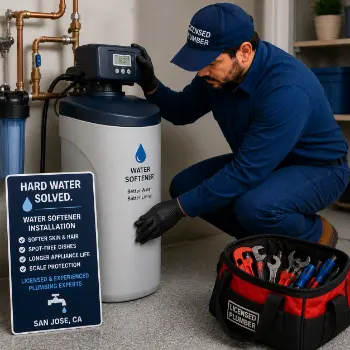
Signs of Hard Water in Your Home
Hard water shows up in lots of small ways. If you see two or more of these, your home likely needs a softener.
Spots on Glasses and Dishes
Cloudy white spots on glasses straight out of the dishwasher are mineral deposits. The water dries and leaves the minerals behind. Soft water rinses clean and dries spot-free.
Dry Skin and Hair
If your skin feels itchy after a shower or your hair never quite feels clean, hard water is usually the cause. The minerals coat your skin and scalp. Soap doesn't rinse off the way it should.
Soap Scum Buildup
A film of scum on shower walls and tub edges means your water has too much calcium and magnesium. The minerals react with soap to form scum. It takes far more cleaning effort than it should.
Scale on Faucets and Showerheads
White or chalky buildup on faucets, showerheads, and aerators is hardness scale. Over time it blocks the openings and weakens water flow. You can scrub it off, but it always comes back.
Reduced Water Pressure
Scale builds up inside pipes the same way it builds up outside fixtures. Over years, it narrows the inside of the pipe. The result is weak pressure at sinks, showers, and the kitchen faucet.
How Hard Is San Jose Water?
San Jose Water Company tests their water regularly. The hardness ranges by source and neighborhood.
Most of central San Jose runs 7 to 14 grains per gallon. That's hard water. Areas like Almaden Valley's slab homes and parts of the foothill area of Evergreen run higher, between 15 and 26 grains per gallon. That's very hard. The foothill areas pull from local groundwater, which has the highest hardness in the system.
For comparison, soft water is under 1 grain per gallon. Even San Jose's softest water is many times harder than that.
Types of Water Softeners We Install
There are two main types. Each works differently and fits different homes.
Salt-Based Ion Exchange Softeners
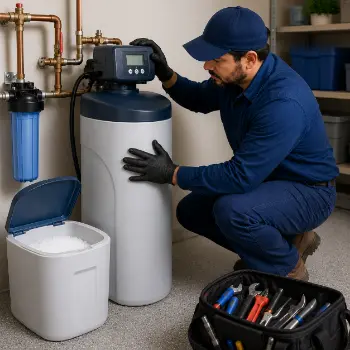
Salt-based softeners are the most common type. They use resin beads to swap calcium and magnesium for sodium. The result is true soft water. Soap lathers easily. Scale stops forming. Water heaters last longer.
The system needs occasional salt refills, usually every 4 to 8 weeks. It also discharges a small amount of salty water during regeneration. Most San Jose homes can use them with no issues.
Salt-Free Water Conditioners
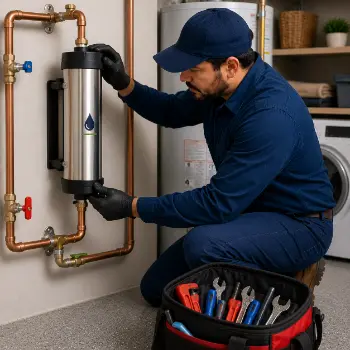
Salt-free systems don't actually soften water. They condition it. They change the structure of the minerals so they don't stick to surfaces. The result is less scale and easier cleaning. Cupertino homeowners on septic systems often choose salt-free for this reason.
The downside is that the water still feels hard. Soap doesn't lather as well as with a real softener. The upside is no salt, no waste water, and almost no maintenance. Salt-free works well for homes on a septic system or where salt use is restricted.
Dual-Tank Softeners
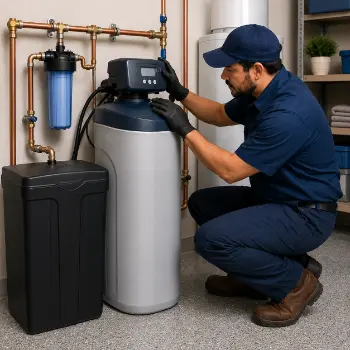
Dual-tank systems have two resin tanks instead of one. While one regenerates, the other keeps providing soft water. There's no downtime and no scheduled regeneration during off hours.
These systems cost more upfront but make sense for big homes or homes with high water use.
Water Softener Cost in San Jose
Pricing depends on the system type, the home size, and the install location. Here are typical ranges for water softener installation San Jose homeowners can expect:
| Service | Typical Price Range | Notes |
|---|---|---|
| Basic salt-based softener install | $1,800–$3,200 | Unit + labor + connections |
| Mid-range salt-based softener | $2,500–$4,500 | Higher-capacity systems |
| Salt-free water conditioner | $2,200–$4,000 | No salt, low maintenance |
| Dual-tank softener system | $3,500–$6,500 | Continuous soft water |
| Combo softener + filter system | $3,800–$7,500 | Sediment + softening |
These prices include the unit, install labor, plumbing connections, and basic setup. Custom plumbing changes or unusual install locations can add to the cost. You see the full price before any work starts.
How a Softener Install Works
Every install follows the same simple steps. A tech comes out for an on-site visit. He looks at your water main, the install location, and the drain access. He also tests your water hardness on the spot.
You get a fixed price in writing within 24 hours. The estimate covers the unit, all materials, and labor. We also explain how the system works, what maintenance it needs, and what kind of salt to buy.
On install day, we shut off the main water briefly. We add the bypass valves, the drain line, and the unit itself. Most installs take 2 to 4 hours. We test the system, set up the regeneration schedule, and walk you through how it works before we leave.
Softener Maintenance Schedule
Salt-based softeners need a salt refill every 4 to 8 weeks for most homes. Use only solar salt pellets or evaporated salt. Rock salt has impurities that can damage the resin tank.
Once a year, we recommend a resin cleanser flush to keep the beads working at full capacity. We offer annual service plans that handle this and check the system over. If hard water has already caused pinhole leaks, our leak detection service can find hidden damage before it reaches a wall or ceiling.
Salt-free systems need almost no maintenance. The cartridge inside lasts 5 to 10 years before replacement.
Frequently Asked Questions
How much does water softener installation San Jose cost?
Quality salt-based softener installation runs $1,800 to $3,500. Salt-free conditioners run $1,500 to $4,000. The price difference depends on system capacity, brand, and installation complexity.
Salt-based softener or salt-free conditioner — which is better?
Salt-based softeners actually remove minerals and produce noticeably softer water. Salt-free conditioners change the mineral structure so it doesn't scale. Salt-based wins for very hard water and laundry quality. Salt-free works for moderate hardness and homes that can't drain brine.
How long does water softener installation take?
Most installs finish in 3 to 5 hours. Add another hour or two if we need to add a bypass loop or install a drain line. Complex installs in difficult locations can run a full day.
Where is the best location to install a water softener?
Near the main water entry point, before any branches to outdoor irrigation or fire suppression. Most installs go in garages, basements, or utility closets. The location needs power, drain access, and adequate space.
How often does a water softener need maintenance?
Salt refills every 4-8 weeks depending on usage and system size. Resin replacement every 8-15 years. Annual cleaning of the brine tank prevents buildup. We can include yearly maintenance in a service plan.